- Whatsapp: +8615825688470
- Email: [email protected]


You know that choosing the right circuit breaker is critical for protecting your electrical systems. The choice between a 3P MCCB and a 4P MCCB can impact system safety, reliability, and cost. This guide explains the differences, applications, and selection tips to help you make the best choice for your projects.
A Molded Case Circuit Breaker (MCCB) is a protective device that safeguards electrical circuits from overcurrent, short circuits, and overloads. Unlike fuses, MCCBs are resettable, allowing you to restore power quickly without replacing components.
For your industrial or commercial projects, the right MCCB ensures safety, reduces downtime, and protects your equipment investment. A reliable MCCB can prevent unexpected equipment failures, minimize maintenance costs, and give you peace of mind knowing that your electrical systems are properly protected.
A 3-pole MCCB protects the three phases of a three-phase electrical system—L1, L2, and L3—but does not switch the neutral wire. This makes it ideal for balanced loads where neutral protection is not necessary.
You will often find 3P MCCBs in industrial motors, pumps, and machinery requiring standard three-phase protection. For your project, a 3-pole MCCB offers several advantages: it is cost-effective, compact, and simpler to install and maintain. If your electrical system is balanced and straightforward, a 3P MCCB usually meets your protection requirements efficiently.
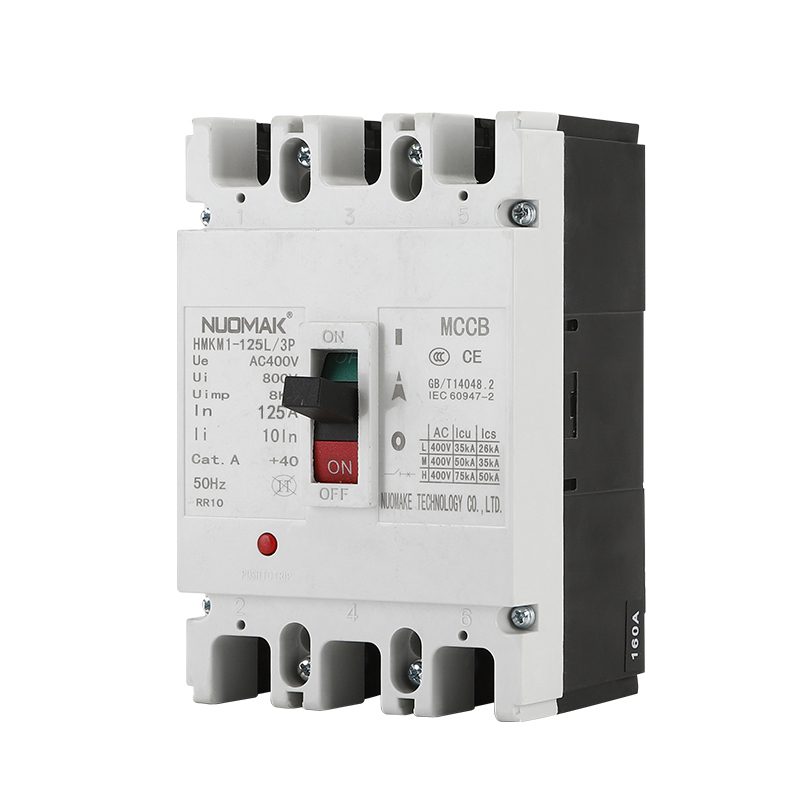
A 4-pole MCCB, by contrast, protects all three phases plus the neutral wire. The additional pole provides full isolation, which is especially important in systems with unbalanced loads or mixed single- and three-phase circuits.
You will typically use a 4P MCCB in systems such as generator inputs, backup power setups, or circuits supplying sensitive equipment. By disconnecting the neutral during an overcurrent event, the 4P MCCB ensures maximum safety and protects both equipment and personnel. For your project, a 4-pole MCCB provides enhanced protection, greater flexibility, and compliance with electrical codes that require neutral disconnection.
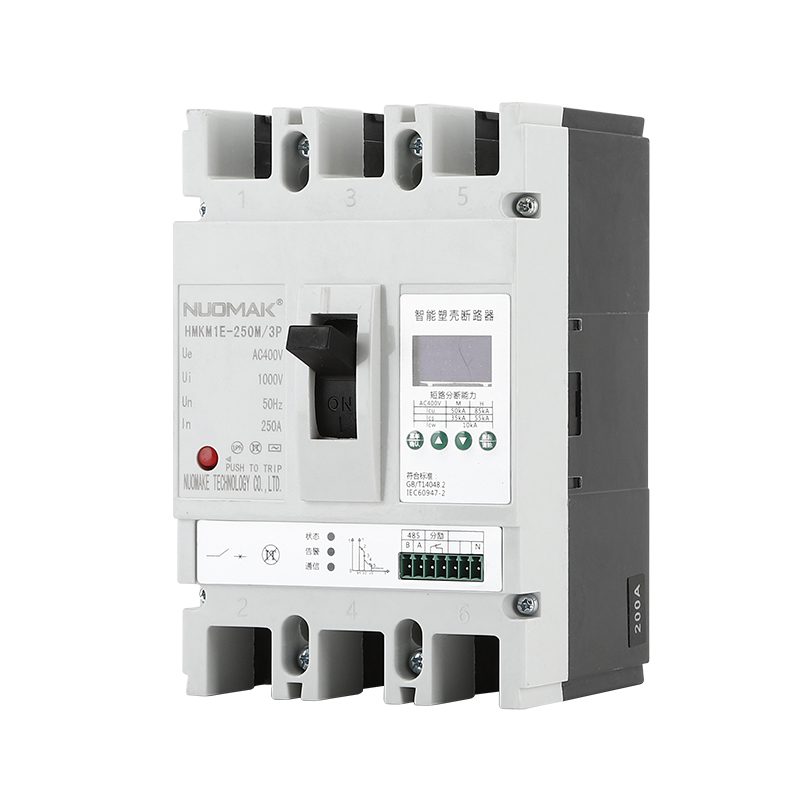
While both 3P and 4P MCCBs serve to protect electrical circuits, their differences can influence system design, safety, and cost. Here are the main distinctions:
When selecting between a 3P and 4P MCCB, it is important to assess your system carefully. Consider your load type: if the system is balanced and the neutral carries minimal current, a 3P MCCB is usually sufficient. However, if you have unbalanced loads, single-phase circuits distributed across three phases, or sensitive equipment, a 4P MCCB is safer.
Your wiring configuration is another factor. Three-wire systems are compatible with 3P MCCBs, while four-wire systems require 4P MCCBs to ensure complete protection. Safety and compliance requirements should also guide your choice. Regulatory codes may require neutral disconnection in some installations, making a 4P MCCB mandatory. Finally, consider long-term reliability: while a 3P MCCB is cheaper, a 4P MCCB may prevent equipment damage, downtime, and compliance issues, ultimately saving cost over the system’s lifetime.
NUOMAK offers a full range of high-quality MCCBs for industrial and commercial applications. Whether you need a 3-pole or 4-pole MCCB, our products provide reliable performance, high breaking capacity, and durability under demanding conditions.
Our MCCBs are designed to protect critical equipment, reduce downtime, and ensure compliance with industry standards. For distributors and system integrators, NUOMAK also provides OEM and ODM services to tailor solutions to specific project needs. Choosing NUOMAK gives you peace of mind, knowing your electrical systems are safe, efficient, and supported by professional-grade components.
Can I replace a 4P MCCB with a 3P MCCB?
Only if your system does not require neutral protection. Removing neutral protection can compromise safety and regulatory compliance.
Why is a 4P MCCB more expensive than a 3P MCCB?
The additional neutral pole and switching mechanism increase cost but provide greater protection and reliability.
Is a 4P MCCB necessary for generator protection?
Yes, especially for 3-phase 4-wire generator outputs or unbalanced load scenarios.
Which MCCB is better for unbalanced loads?
A 4P MCCB provides full isolation and safer operation, making it the preferred choice.
How do I decide between 3P and 4P MCCB for my project?
Evaluate your load type, wiring system, safety needs, and compliance requirements. When in doubt, 4P MCCB is typically safer.
Choosing the right MCCB 3P or 4P depends on your system’s wiring, load balance, and safety requirements. The correct choice protects your equipment, ensures reliability, and maintains compliance. NUOMAK MCCBs offer trusted performance and professional-grade quality, keeping your industrial and commercial projects safe, efficient, and worry-free.

WEBSITE&YUEQING NUOMAKE TECHNOLOGY CO.,LTD.
Privacy Policy | SiteMap
Copyright NUOMAK
 Optimized by Seraphinite Accelerator