- Whatsapp: +8615825688470
- Email: [email protected]


When you think of AC Moulded Case Circuit Breakers, you probably picture devices that simply protect your electrical circuits from overloads and short circuits. But for modern industrial automation, that’s often not enough. What if you need to cut power remotely during a fire alarm? Or ensure a motor doesn’t restart automatically after a blackout?
That’s where MCCB internal accessories like the Shunt Trip (SHT) and Undervoltage Release (UVR) come into play. These add-ons transform a standard breaker into a smart, responsive safety device. In this guide, Nuomak explains the technical differences and helps you select the right one for your Distribution Box.
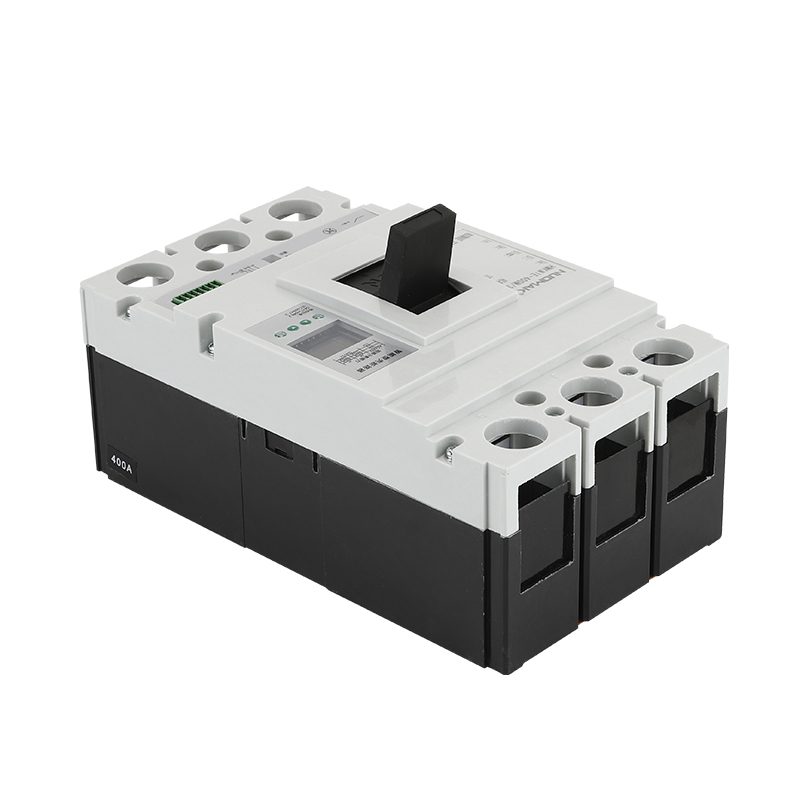
A Shunt Trip (SHT) is an accessory that allows you to remotely trip (open) the MCCB using an external electrical signal. Think of it as the “Emergency OFF” switch for your breaker.
The Principle: It operates on an “Energize-to-Trip” logic. The coil sits idle until it receives a voltage signal. Once energized, it mechanically pushes the trip bar to open the breaker.
Key Applications:
Fire Safety: Interfacing with fire alarm systems to cut non-essential power.
Emergency Stops: Linked to a mushroom-head button on a control panel.
Technical Note: It requires a stable control voltage (24V DC, 230V AC, etc.). Once tripped, the AC Moulded Case Circuit Breaker must be manually reset; it will not reclose automatically.
An Undervoltage Release (UVR* is a “Fail-Safe” device that trips the MCCB when the supply voltage drops below a critical threshold.
The Principle: It operates on a “De-energize-to-Trip” logic. The coil *must* be energized continuously to keep the breaker closed. If voltage falls (typically below 35-70% of rated voltage) or fails completely, the spring releases and trips the breaker.
Key Applications:
Motor Protection: Prevents motors from restarting unexpectedly when power returns, protecting operators and equipment.
Brownout Protection: If you are using a Voltage Regulator but the grid becomes too unstable, the UVR trips the breaker to save sensitive electronics from low-voltage damage.
Safety Interlocks: If a safety door is opened (cutting the control wire), the UVR loses power and trips the breaker immediately.
Here is the technical breakdown to help you decide.
| Feature | Shunt Trip (SHT) | Undervoltage Release (UVR) |
| Logic | Energize to Trip (Power ON = Trip) | De-energize to Trip (Power OFF = Trip) |
| Default State | Coil is Idle (No current) | Coil is Active (Continuous current) |
| Trigger | External signal (e.g., Fire Alarm) | Voltage drop / Power Loss |
| Primary Goal | Remote Control & Emergency Stop | AC Motor Protection & Fail-Safe |
| Reset Requirement | Manual reset of breaker handle | Breaker cannot close until voltage is restored |
Choosing the right accessory depends on your specific safety strategy.
Choose a Shunt Trip (SHT) if:
You need to integrate the breaker with a Fire Alarm System.
You require a remote “Kill Switch” for the facility manager.
Energy efficiency is a priority (SHT consumes zero power in standby mode).
Choose an Undervoltage Release (UVR) if:
You need Fail-Safe protection (if the control wire is cut, the system must stop).
You are protecting large motors and want to prevent automatic restarting.
Your grid is unstable, and you want to disconnect loads during severe voltage sags.
Tip: For critical systems requiring precise settings, consider using our AC LCD Adjustable Current MCCB, which offers advanced digital protection features alongside these accessories.
When working with Nuomak, integration is seamless. Our MCCBs are designed with modular internal slots that allow for easy field installation of accessories.
1. Dedicated Slots: Nuomak MCCBs usually feature separate slots for auxiliary contacts, alarm contacts, and SHT/UVR releases.
2. Voltage Matching: Ensure you select the accessory model (DC 24V, AC 230V, etc.) that matches your control circuit voltage.
3. Safety First: Always test the accessory function after installation. For UVR, verify that the breaker cannot be latched (closed) when the UVR coil is not energized.
Can I install both a Shunt Trip and a UVR in the same MCCB?
Yes, most frame sizes of Nuomak AC Adjustable Current MCCBs have multiple slots, allowing you to install both a Shunt Trip (for remote control) and Auxiliary Contacts (for status feedback). However, SHT and UVR often occupy the same physical slot type, so please check the specific datasheet or contact us.
Why won’t my breaker reset after tripping?
If you are using a UVR, the most common reason is that the supply voltage has not returned. The UVR mechanically locks the breaker mechanism prevents it from latching (resetting) until the coil is energized (typically >85% rated voltage).
Can UVR protect against voltage surges?
No, UVR is for low voltage. For protection against high voltage surges, you should consider using a Surge Protection Device (SPD) or a dedicated Voltage Regulator in your panel.
Choosing between a Shunt Trip and an Undervoltage Release boils down to your operational philosophy: Control vs. Protection. If you want remote emergency control, the Shunt Trip is your go-to. If you need fail-safe protection against power loss, the UVR is indispensable.
With Nuomak MCCBs, you get the flexibility to customize your protection. Don’t settle for basic safety—upgrade your AC Moulded Case Circuit Breaker today with the right accessories!
Contact Nuomak now for a quote on customized MCCBs with factory-installed Shunt Trips or UVRs.

WEBSITE&YUEQING NUOMAKE TECHNOLOGY CO.,LTD.
Privacy Policy | SiteMap
Copyright NUOMAK
 Optimized by Seraphinite Accelerator