- Whatsapp: +8615825688470
- Email: [email protected]


If you’re upgrading or expanding an industrial or commercial electrical system, you’ve probably come across the term 3 pole MCCB. Understanding what it means is essential for choosing safe, reliable, and long-lasting protection. This guide explains everything you need to know so you can select the right MCCB with confidence.
A 3 pole MCCB (Molded Case Circuit Breaker) is a protective device designed to safeguard three-phase electrical systems, which are commonly used in factories, industrial machinery, commercial buildings, and other high-demand applications.
In simple terms:
A 3 pole MCCB is essential whenever you operate high-power equipment that requires balanced, consistent, three-phase power.
In industrial systems, it acts as a front-line protection device to ensure both equipment safety and operational stability.
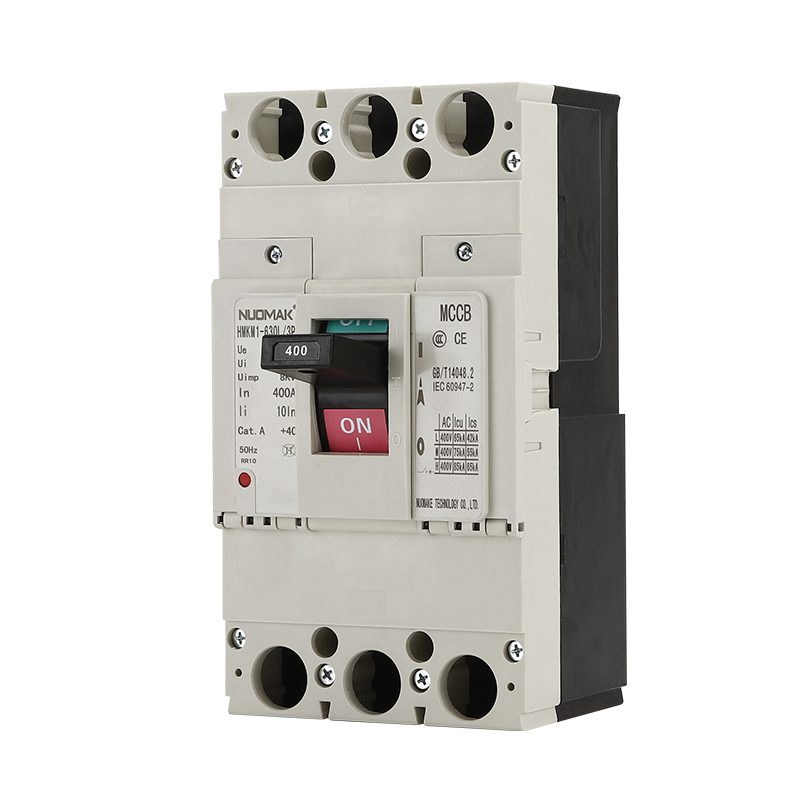
To understand the importance of a 3 pole MCCB, you should know how it protects your system:
Inside the MCCB, arc runners and arc chutes quickly break the arc when current is interrupted.
No matter where the fault occurs, all three phases disconnect together to ensure complete system isolation.
This holistic protection is why a 3 pole MCCB is widely used in demanding industrial environments.
You need a 3 pole MCCB whenever your equipment or electrical system operates on three-phase power. Typical applications include:
If your system is designed for high power and continuous operation, a 3 pole MCCB is the standard choice.
When choosing a 3 pole MCCB, focus on these essential features:
Select a current rating suitable for your load:
Common: 63A, 100A, 125A, 160A, 250A, 400A, 630A, 800A, 1000A…
This determines how much fault current the breaker can safely interrupt.
Typical ranges: 10kA, 18kA, 25kA, 35kA, 50kA, 65kA, 100kA.
Allows tuning to your system requirements. Options include:
Look for fire-resistant, heat-resistant, and impact-resistant materials.
Choose MCCBs that meet international standards:
These features help you achieve better control, automation, and safety.
Understanding other pole options helps you determine whether 3 pole is truly what you need.
If your equipment uses balanced three-phase power, a 3 pole MCCB is the correct choice.
Here’s a practical step-by-step process you can follow:
Motors, resistive loads, AC units, compressors, etc.
400V / 50Hz or other regional standards.
Use the equipment’s nameplate or engineering design.
Match the MCCB’s breaking capacity with the maximum prospective fault current.
Thermal-magnetic for general use; electronic for precise control.
Check for IEC, CE, or other required certifications.
It’s wise to choose a slightly higher current rating if your system may grow.
Your system remains balanced and stable.
Prevents unexpected breakdowns.
Mitigates arc flash, short circuit, and overload risks.
Sensitive machinery lasts longer.
Fast, automatic tripping minimizes production interruption.
Compatible with most industrial control panels and power systems.
NUOMAK offers high-reliability MCCBs engineered for industrial durability and global compliance. With strong breaking capacity, stable trip performance, and flexible accessories, our 3 pole MCCBs ensure your electrical system stays safe, efficient, and ready for continuous operation. Choose NUOMAK for dependable protection you can trust.
A 3 pole MCCB protects only the three phases, while a 4 pole MCCB adds neutral protection for systems with unbalanced or sensitive neutral loads.
Technically yes, but it is not recommended. It is designed specifically for three-phase loads.
Check your system’s maximum prospective short-circuit current, usually provided in electrical design drawings. Choose an MCCB rated above that value.
MCCBs can last 10–20 years depending on usage, environment, and maintenance.
Yes. NUOMAK MCCBs meet IEC 60947-2 and CE safety requirements, ensuring global compatibility.

WEBSITE&YUEQING NUOMAKE TECHNOLOGY CO.,LTD.
Privacy Policy | SiteMap
Copyright NUOMAK
 Optimized by Seraphinite Accelerator