- Whatsapp: +8615825688470
- Email: [email protected]


Selecting the right Molded Case Circuit Breaker (MCCB) is a critical decision for protecting your industrial or commercial electrical systems. A reliable MCCB is the backbone of safety and efficiency. This comprehensive comparison focuses on the popular MCCB 100A 3P (three-pole, 100 Ampere) models from three leading global providers: Schneider Electric, Mitsubishi Electric, and NUOMAK. You need a product that offers maximum protection, longevity, and value for your investment. Let’s dive into the specifics so you can make an informed choice for your next project.
Schneider Electric is a globally recognized leader in energy management and automation. Their MCCBs, often part of the Compact NSX or EasyPact CVS ranges, are known for their robustness and innovative features.
Key Features: Schneider’s MCCBs frequently include advanced trip units (e.g., thermal-magnetic or electronic) that offer precise, adjustable settings, which is essential for complex loads.
Target Market: Ideal for large-scale industrial projects, data centers, and critical infrastructure where integration with broader energy management systems is required.
Pros: High-quality build, global support, and extensive documentation.
Cons: Often positioned at a higher price point, reflecting the premium brand and feature set.
Mitsubishi Electric is a major player, particularly well-regarded in the Asian and specialized machinery markets. Their MCCBs, such as those in the WS-V Series, are characterized by their compact design and exceptional reliability.
Key Features: Mitsubishi focuses heavily on space-saving designs, which is a massive advantage when panel space is at a premium. They are also known for maintaining high breaking capacity in a smaller frame.
Target Market: Suitable for equipment manufacturers (OEMs), control panels, and facilities where cabinet size is a constraint.
Pros: Excellent quality control, smaller physical footprint, and proven long-term performance.
Cons: May require specialized regional distributors for sourcing and support in some areas.
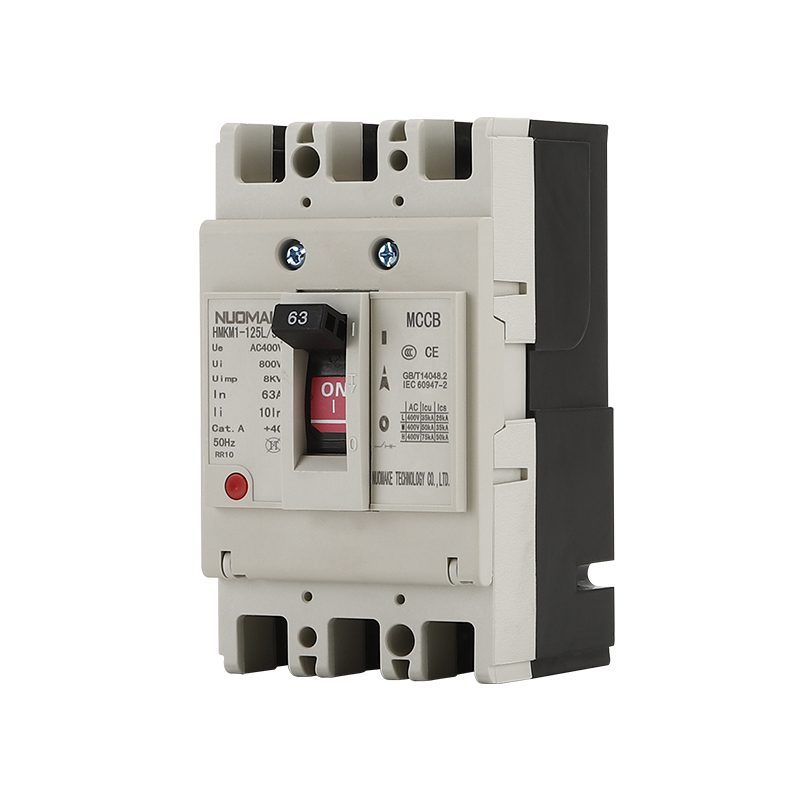
NUOMAK is rapidly emerging as a powerful alternative, focusing on delivering high-performance protection without the unnecessary cost overhead. Our MCCB 100A 3P models are built to meet international standards, offering the critical safety features you demand for industrial applications.
Key Features: NUOMAK breakers deliver competitive breaking capacities and superior thermal-magnetic performance in a reliable, easy-to-install package. They are engineered for consistent performance under demanding industrial conditions.
Target Market: Excellent choice for contractors, wholesalers, and project managers who require bulk quantities of high-quality, certified breakers that meet budget requirements without compromising safety.
Pros: Exceptional value, quality certification compliance, and a commitment to providing essential protection features efficiently.
Cons: Newer to the global market than the other two, though rapidly expanding its distribution network.
| Feature | Schneider (Compact NSX/EasyPact) | Mitsubishi (WS-V Series) | NUOMAK |
| Primary Advantage | Advanced features and integration | Compact size and reliability | High performance and value |
| Trip Unit | Thermal-magnetic, optional Electronic | Thermal-magnetic (standard) | High-accuracy Thermal-magnetic |
| Price Point | Premium | Mid-to-High | Highly Competitive |
| Installation | Standardized, but can be complex | Easy installation, space-saving | Simple, robust, and reliable |
| Certification | Global (IEC, UL, etc.) | Global (IEC, JIS, etc.) | Global Certification Compliance |
| Best For | Large, integrated projects | Space-constrained panels/OEMs | Cost-sensitive, high-volume projects |
As a procurement specialist or project manager, you must prioritize the needs of your electrical system over brand loyalty.
Breaking Capacity (Icu): This is non-negotiable. Ensure the MCCB’s rating meets or exceeds the maximum short-circuit current available at the installation point.
Panel Space: If your distribution panel is crowded, Mitsubishi’s compact design might be the best physical fit.
Required Features: Do you need highly adjustable electronic trip settings? If so, Schneider’s premium lines are suitable. If a standard, reliable thermal-magnetic unit is sufficient, NUOMAK offers the required protection at a better price point.
Budget and Scale: For large installations requiring hundreds of reliable breakers, the cost-effectiveness of NUOMAK offers significant savings without sacrificing essential safety compliance.
In a market saturated with options, making the best choice for your MCCB 100A 3P comes down to balancing technical requirements, budget, and brand trust. Schneider and Mitsubishi are established industry giants, but you no longer need to pay a premium for proven safety and performance. NUOMAK provides the ideal intersection of high quality and superior value, ensuring your projects are protected reliably and affordably. We invite you to explore how NUOMAK can become your reliable partner.
What does “100A 3P” mean on an MCCB?
100A refers to the continuous current rating—the maximum current the breaker is designed to carry constantly. 3P means three-pole, indicating it is designed to protect a three-phase electrical system.
What is the difference between an MCCB and an ACB (Air Circuit Breaker)?
MCCBs are generally used for lower current ratings (up to 2500A) and lower fault levels. ACBs are used for much higher current ratings and massive fault levels in main power distribution boards.
Is the breaking capacity (Icu) important for commercial buildings?
Absolutely. The Icu rating (Ultimate Short-Circuit Breaking Capacity) must be high enough to safely interrupt the largest short-circuit current that could occur in your facility. Always consult your electrical engineer to determine the correct Icu.

WEBSITE&YUEQING NUOMAKE TECHNOLOGY CO.,LTD.
Privacy Policy | SiteMap
Copyright NUOMAK
 Optimized by Seraphinite Accelerator