- Whatsapp: +8615825688470
- Email: [email protected]


In today’s competitive landscape, your facility’s operational continuity is paramount. You invest in high-quality machinery, but have you adequately protected that investment from the silent threat of power instability? Understanding the mechanics of an AC Voltage Stabilizer is the first step toward safeguarding your essential equipment and ensuring maximum uptime.
An AC Voltage Stabilizer is an electrical device designed to automatically maintain a consistent output voltage level, regardless of fluctuations in the incoming mains supply. For your sensitive industrial machinery, production lines, or critical IT infrastructure, this device acts as a vigilant guardian, ensuring the equipment receives the precise, steady voltage it needs to operate reliably and efficiently.
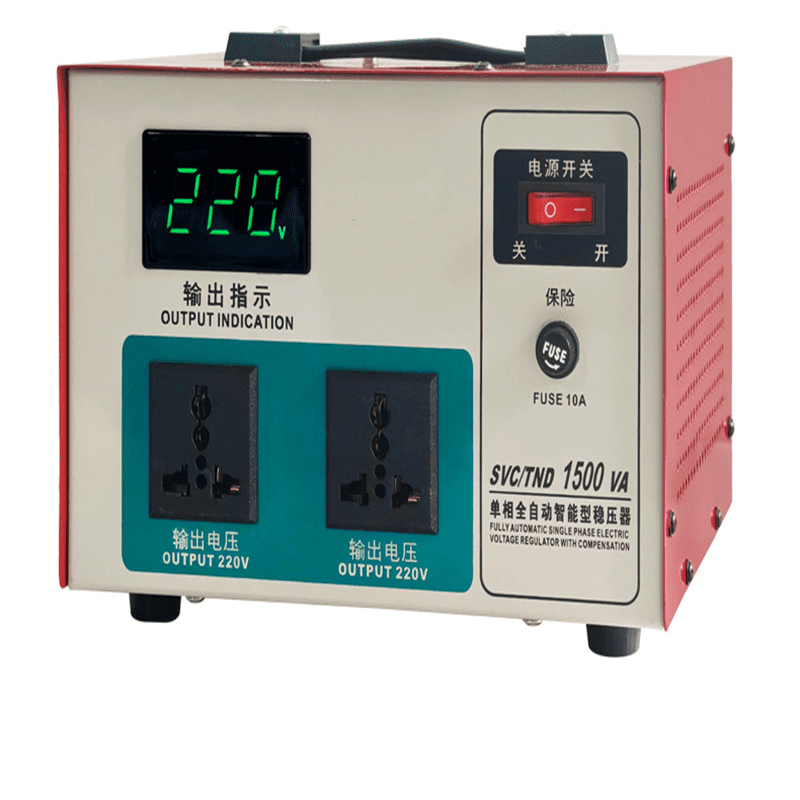
Voltage instability is a common reality that poses a significant risk to commercial and industrial facilities. These fluctuations are deviations from the standard nominal voltage and can manifest as either sags (under-voltage) or swells (over-voltage).
Common Causes Include:
Any of these events can damage sensitive components, reduce equipment lifespan, cause operational errors, and ultimately lead to costly downtime for your business.
While stabilizers come in various types (Relay-type, Servo-Controlled, Static), the core function relies on these fundamental components:
Understanding the working principle simplifies the selection process for your facility:
Selecting the correct stabilizer is crucial to achieve the best performance and protection for your industrial assets. Consider these factors before making your decision:
| Factor | Description |
| Power Rating (kVA) | The total load (in kVA) of the equipment to be protected. You must choose a stabilizer with a slightly higher rating (at least a |
| Input Voltage Range | The minimum and maximum voltage fluctuations your facility typically experiences. A wider input range means the stabilizer can handle more severe fluctuations. |
| Phase Type | Do you require a Single-Phase or Three-Phase stabilizer? Industrial facilities typically require three-phase units. |
| Regulation Accuracy | The precision of the output voltage. High-precision equipment requires a |
| Correction Speed | How quickly the unit can correct a voltage fluctuation. Servo models are generally faster and more suited for rapidly fluctuating loads. |
Protecting your facility’s capital equipment from the unpredictable nature of power grids is not an option—it’s a necessity for operational excellence. By understanding the sophisticated yet reliable mechanism of the AC Voltage Stabilizer, you can confidently invest in the right solution. Let NUOMAK be your partner in power stability, offering high-precision stabilizers engineered for the demanding needs of your industrial and commercial operations.
What is the main difference between a Servo Stabilizer and a Relay Stabilizer?
Servo Stabilizers use a servo motor to smoothly and continuously adjust an auto-transformer, offering very high accuracy (typically ±1%) and a wide input range. Relay Stabilizers use electronic relays to switch between fixed transformer taps, offering a quicker but stepped correction with lower accuracy. Servo stabilizers are generally preferred for industrial loads.
Can a stabilizer protect against lightning strikes?
A standard AC Voltage Stabilizer primarily protects against voltage sags and swells. For protection against severe transient voltage surges (like lightning or large electrical faults), you should implement dedicated Surge Protection Devices (SPDs) in conjunction with your stabilizer.
Does a stabilizer regulate the frequency of the AC supply?
No, an AC Voltage Stabilizer only regulates the magnitude of the voltage (Volts). It does not change the frequency (Hertz) of the power supply.
How do I calculate the required kVA rating for my stabilizer?
Sum the total power consumption (in Watts) of all connected devices. Divide this sum by the power factor (typically 0.8 for industrial loads) to get the kVA rating. Always add a safety margin of 20% to this calculated kVA value.

WEBSITE&YUEQING NUOMAK TECHNOLOGY CO.,LTD.
Privacy Policy | SiteMap
Copyright NUOMAK
 Optimized by Seraphinite Accelerator