- Whatsapp: +8615825688470
- Email: [email protected]


You may be wondering if a 3-pole MCCB can be safely and efficiently used in a single-phase electrical system. Selecting the right MCCB is critical not only for protecting your equipment but also for ensuring operational reliability. This guide explains how a 3-pole MCCB works in single-phase setups, the advantages and drawbacks, and why NUOMAK MCCBs are a trusted choice for professionals worldwide.
A Molded Case Circuit Breaker (MCCB) is a protective device designed to safeguard electrical circuits against overloads and short circuits. Unlike standard fuses, MCCBs can be reset after tripping, making them ideal for industrial and commercial systems where continuity is essential.
Core functions of an MCCB include:
Using an MCCB correctly is key to maximizing both safety and system efficiency. Choosing the wrong type or size can lead to unnecessary trips, damaged equipment, or even safety hazards.
Before deciding on an MCCB, it’s important to understand your electrical system.
MCCBs are designed to match these system types. For example:
The number of poles in an MCCB corresponds directly to the number of conductors it protects. So, using a 3-pole MCCB in a single-phase system raises questions about compatibility and efficiency.
Technically, a 3-pole MCCB can be used in a single-phase system, but only one of the poles will actively carry the phase current while the other poles remain unused. Here’s what you need to know:
When you might consider using it:
Pros of using a 3-pole MCCB in a single-phase system:
Cons:
Practical example: In a commercial setup with heavy machinery running on single-phase power, a 3-pole MCCB with high interrupting capacity may prevent nuisance tripping while ensuring safe operation.
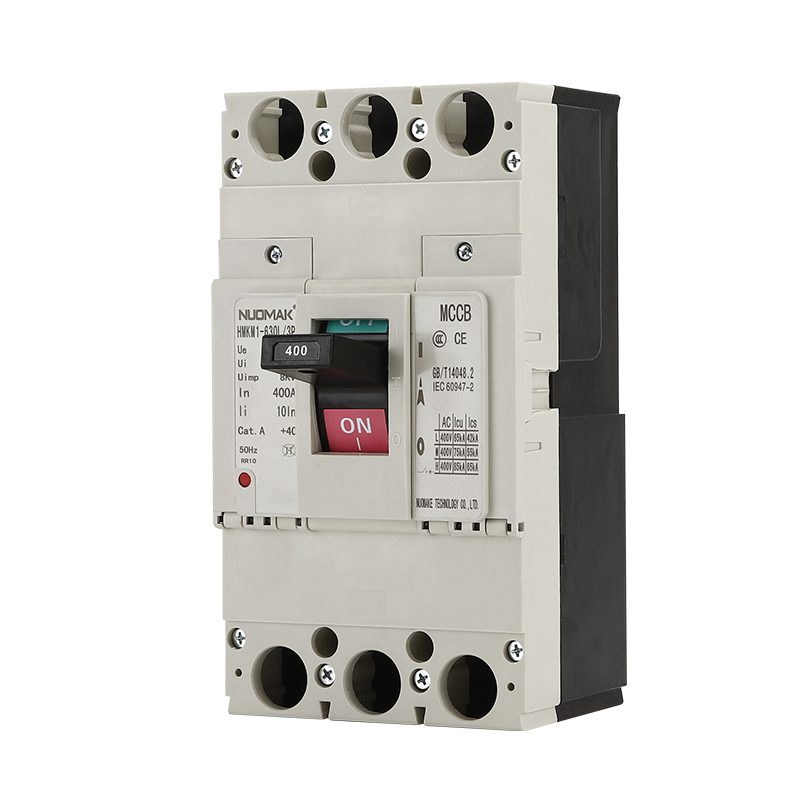
Before installing a 3-pole MCCB in a single-phase system, consider the following:
NUOMAK MCCBs are designed to meet rigorous quality standards, including ISO, IEC, and CE certifications. Their precision engineering guarantees long-term reliability, even under heavy-duty operation.
If your system will remain single-phase, consider the following alternatives:
Cost vs. performance: While 3-pole MCCBs offer robust protection, single-pole or 2-pole options are more economical and efficient for purely single-phase setups.
To maximize safety and performance:
Choosing NUOMAK MCCBs gives you confidence in both single-phase and three-phase applications:
Whether you are planning a single-phase installation today or considering future upgrades, NUOMAK MCCBs offer the flexibility and protection you need.
You now understand when and how a 3-pole MCCB can be used in a single-phase system. While single-pole or 2-pole MCCBs are often more cost-effective, a 3-pole MCCB can provide robust protection and future-proofing for expanding electrical systems. Choose NUOMAK MCCBs to ensure safety, efficiency, and reliability in all your electrical projects.
Can I use all three poles of a 3-pole MCCB in a single-phase system?
Only one pole carries the load; the other two remain unused unless future upgrades are planned.
Is it cost-effective to use a 3-pole MCCB for a single-phase application?
Usually, no. Single-pole or 2-pole MCCBs are more economical, unless you need high breaking capacity or plan a future three-phase upgrade.
What are the risks of using an oversized MCCB?
Oversized MCCBs may reduce sensitivity to overloads, increase cost, and occupy unnecessary space.
How do I select the right MCCB rating for my system?
Match the MCCB to your system’s voltage, load current, and short-circuit capacity requirements.
Can I upgrade from single-phase to three-phase using the same 3-pole MCCB?
Yes. A 3-pole MCCB installed on a single-phase circuit can later accommodate a full three-phase system without replacing the breaker.

WEBSITE&YUEQING NUOMAKE TECHNOLOGY CO.,LTD.
Privacy Policy | SiteMap
Copyright NUOMAK
 Optimized by Seraphinite Accelerator