- Whatsapp: +8615825688470
- Email: [email protected]


In low-voltage power distribution systems, choosing the right main switch directly determines the safety, reliability, and long-term stability of the entire system. Among all options, the MCCB (Molded Case Circuit Breaker) has become the preferred main breaker for distribution boxes due to its high breaking capacity, advanced protection features, and strong adaptability.
This guide explains the five major advantages of using an MCCB as the main switch, and provides practical installation tips and model-selection guidance to help electrical engineers, contractors, and facility managers make the best decision.
An MCCB is a protective device designed for overload, short-circuit, and isolation functions.
Compared with MCB (miniature circuit breaker) and isolating switches, the MCCB provides higher breaking capacity, adjustable trip settings, and modular expansion—making it ideal for use at the incomer of a distribution box.
An MCCB is engineered to safely interrupt extremely high fault currents, preventing equipment damage and electrical fires.
Typical breaking capacity (Icu) ranges from:
35kA
50kA
100kA or higher depending on model
Why this matters:
In many distribution boxes—especially those close to the transformer—the fault current may exceed what an MCB can handle (usually only 6kA–25kA). Only an MCCB ensures system-level safety.
Compared to other devices:
MCB: low breaking capacity; not suitable for main incoming circuits
Isolator: cannot break short-circuit current at all
An MCCB combines three protection functions in a single device:
Long-time delay (overload)
Short-time delay (short-circuit)
Instantaneous trip (severe fault)
This ensures selective coordination and prevents unnecessary upstream tripping.
Compared to MCBs:
Fixed characteristics, no adjustment
Lower precision
Harder to achieve selective protection
Compared to isolators:
No protective function at all
MCCBs offer various frame sizes and adjustable rated currents, making them suitable for small distribution boards, industrial equipment, and large power systems.
Adjustable parameters include:
Current setting (Ir)
Short-circuit trip settings
Time delay adjustments
This flexibility makes MCCBs ideal for loads with varying power or systems requiring future expansion.
A high-quality MCCB typically provides:
Electrical life:several thousand on-load operations
Mechanical life:tens of thousands of off-load switch operations
Strong resistance to harsh environments and frequent switching
Why this matters:
The main switch in a distribution box is frequently used during maintenance and shutdown—MCCBs are designed to handle this without degradation.
MCCBs support a wide range of accessories to enhance automation and management:
Available modules include:
Auxiliary contacts
Alarm contacts
Under-voltage release
Shunt trip
Motorized/remote operation mechanism
Front/rear mounting & wiring options
Application value:
Enables remote monitoring
Fits different cabinet types
Supports smart distribution systems
These capabilities far exceed those of an MCB or isolator.
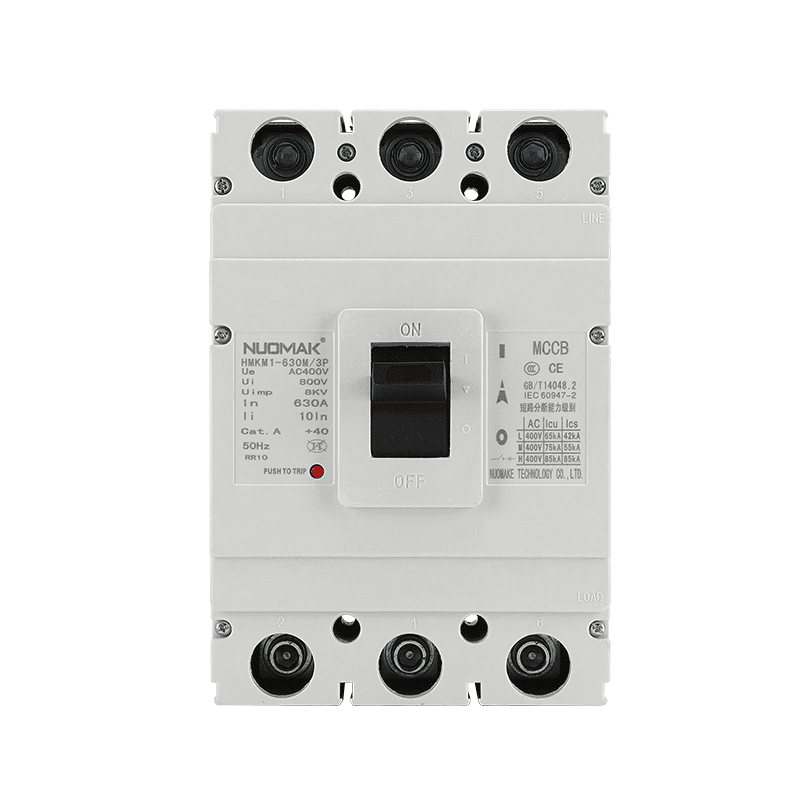
MCCBs are ideal for scenarios requiring high breaking capacity, adjustable protection, or remote control:
Main power supply of a distribution box or cabinet
Large electrical equipment such as pumps, compressors, or HVAC systems
Upstream protection of branch circuits
Power distribution systems requiring monitoring or automation
Industrial and commercial electrical systems with high fault currents
To maximize safety and reliability, follow these best practices:
Match MCCB trip curves with downstream MCBs to ensure only the nearest fault point disconnects.
Loose connections cause overheating. Always follow the manufacturer’s torque specifications.
Avoid overcrowding inside the distribution box; heat buildup reduces lifespan.
Inspect at least every 1–2 years:
Check contact wear
Clean dust buildup
Re-tighten terminals
Test trip mechanism
When choosing an MCCB as the main switch, consider:
Rated current (In)
Breaking capacity (Icu)
Load type
Installation method (front/rear)
Need for adjustable settings
Accessory requirements (under-voltage release, shunt trip, etc.)
For incoming mains, breaking capacity must always exceed the maximum expected short-circuit current.
Yes. Its breaking capacity, protection functions, and durability make it ideal for the incoming main circuit.
MCCB: high breaking capacity, adjustable settings
MCB: small loads, fixed settings, lower protection capability
Yes. Isolators only provide disconnection; MCCBs provide both isolation and full protective functions.
Select based on rated current, breaking capacity, and actual load requirements.
Yes. Adding accessories enables remote control, protection signaling, and integration with automated systems.
Using an MCCB as the main switch in a distribution box offers unmatched advantages in safety, reliability, and configurability. With high breaking capacity, integrated protection, adjustable settings, long service life, and expandable features, MCCBs provide a robust and intelligent safeguard for modern power systems.
A correctly selected and properly installed MCCB ensures long-term stability and forms the foundation of a safe and efficient distribution network.

WEBSITE&YUEQING NUOMAKE TECHNOLOGY CO.,LTD.
Privacy Policy | SiteMap
Copyright NUOMAK
 Optimized by Seraphinite Accelerator